Roof Age and Homeowners Insurance in Florida: What Tampa Bay Buyers Should Know
Roof Age and Homeowners Insurance in Florida: What Tampa Bay Buyers Should Know
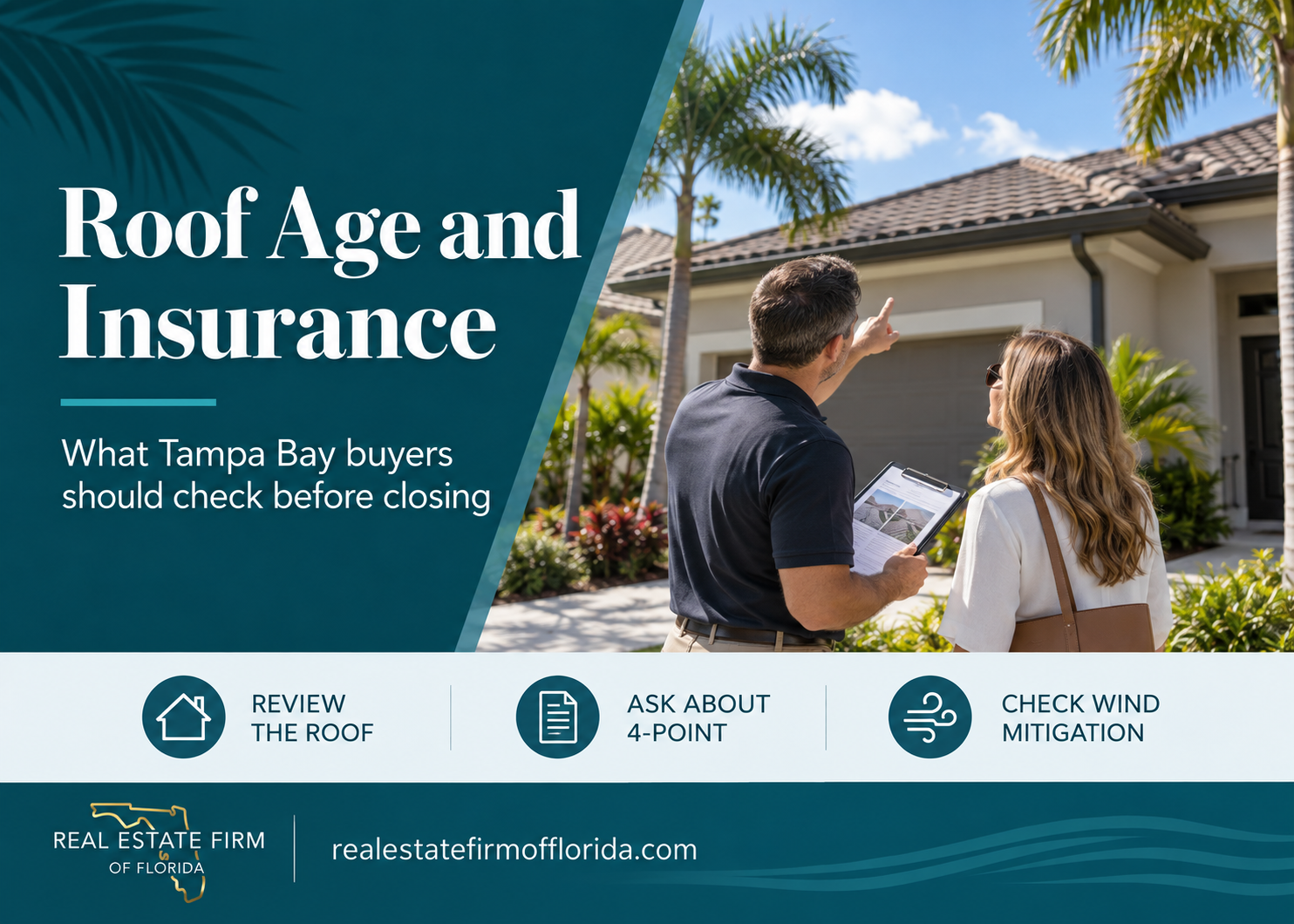
What Should You Know About Roof Age and Homeowners Insurance in Florida?
A roof that isn’t leaking can still become one of the most important conversations in a Florida home purchase.
Tampa Bay buyers often begin by asking whether the roof is in good condition and how many years it may have left. Those are important questions, but there’s another one that belongs in the conversation:
How will the roof affect homeowners insurance?
Florida insurers may evaluate the age, type, construction, and condition of the roof when deciding whether to insure a property and what premium to charge. The Florida Department of Financial Services also notes that insurers may consider the home’s plumbing, electrical system, HVAC system, construction, location, and prior claims as part of underwriting.
For Tampa Bay buyers, that means insurance due diligence should begin before the final days of a transaction. It’s one of several details that should be investigated early in the buying process. Our Florida Home Buying Process Checklist walks buyers through the larger process from financing and inspections through closing.
Table of Contents
Roof Age Is Important, but Age Isn’t the Whole Story
Florida law places limits on how roof age alone may be used in certain underwriting decisions.
Current Florida Department of Financial Services guidance says an insurer can’t refuse to issue or renew a homeowners policy solely because a roof is less than 15 years old.
When a roof is 15 years old or older, the homeowner must be allowed to obtain an authorized roof inspection before replacement can be required solely as a condition of issuing or renewing coverage. If that inspection shows at least five years of remaining useful life, the insurer may not refuse coverage solely because of the roof’s age.
That’s useful protection, but buyers should understand what it doesn’t mean.
It doesn’t guarantee that every insurer must cover every home, nor does it guarantee a specific premium. Underwriting decisions may involve other property characteristics and insurance considerations.
The practical lesson is simple: don’t look at the roof age in isolation.
A Roof Inspection and a Home Inspection Serve Different Purposes
The general home inspection is an important part of evaluating the property, but an insurance company may have its own requirements.
Buyers who want a broader understanding of what a home inspector typically evaluates can also review our guide to navigating home inspections in Tampa Bay.
Florida’s Department of Financial Services explains that insurers may request a specialized roof inspection or a 4-point inspection, particularly on older homes.
A 4-point inspection typically evaluates four major areas:
- Roof
- Plumbing
- Electrical
- Heating and air conditioning
The insurer may use that information when deciding whether the property meets its underwriting guidelines.
A buyer should therefore ask the insurance agent what documentation will be needed for the specific property rather than assuming the standard home inspection report will satisfy every requirement.
Wind Mitigation Can Change the Insurance Conversation
Florida homeowners may qualify for premium credits when a home includes certain hurricane-resistant construction features.
A wind mitigation inspection looks for qualifying characteristics such as roof-to-wall connections, roof covering, roof-deck attachment, opening protection, and other construction features.
Florida’s insurance consumer resources specifically note that improvements such as certain roof coverings, roof connections, and shutters may produce premium discounts.
For a buyer comparing two homes, this can become part of the total-cost discussion.
One home may have an older appearance but stronger mitigation features. Another may have been cosmetically updated while lacking improvements that could affect windstorm premiums.
Again, the visible condition of the home is only part of the ownership picture.
Don’t Wait Until the End of the Inspection Period
One of the easiest mistakes buyers can make is to treat homeowners insurance as a closing task rather than a property-evaluation task.
Insurance companies have their own underwriting process. A quote may change after documentation is reviewed, an inspection is completed, or additional information is requested.
Florida’s consumer guidance expressly reminds buyers that insurance coverage may not begin until the company has approved the application.
For that reason, buyers should begin the process early.
Useful questions for the insurance professional may include:
- Is a 4-point inspection required?
- Is a wind mitigation report available or recommended?
- How does the roof age affect eligibility or premium?
- Are photographs, permits, or repair records needed?
- Does the electrical system create an underwriting concern?
- Does the property’s location affect available coverage?
- Is separate flood insurance appropriate or required?
Flood insurance is a separate consideration from standard homeowners coverage. Buyers who are evaluating Tampa Bay properties may also want to read
What Buyers Don’t Know About Flood Zone Insurance before assuming that a property’s location won’t create additional insurance questions.
The answers may vary significantly from one property to another.
Documentation Can Matter Almost as Much as the Upgrade
A seller may tell a buyer that the roof was replaced, the electrical panel was updated, or the windows are impact-rated.
That information is helpful, but insurance companies may want documentation.
Permits, paid invoices, inspection reports, manufacturer information, and mitigation reports can help establish when an improvement was completed and what was actually installed.
This is one reason we encourage buyers to look beyond the visible finishes when evaluating a home.
A renovated kitchen is easy to photograph. A properly documented roof replacement or wind mitigation feature may have more influence on the practical cost of ownership.
Documentation can also help prevent unnecessary questions late in a transaction. Our article on preventable closing day surprises explains why getting important property information organized before closing can make the final stages of a purchase much smoother.
Sellers Can Benefit From Understanding the Issue Too
This isn’t only a buyer concern.
A seller may believe the property is priced correctly, only to discover that prospective buyers are struggling with insurance questions related to the roof, electrical system, plumbing, or other underwriting issues.
Addressing obvious concerns before listing can sometimes make the home easier for buyers to evaluate.
That doesn’t necessarily mean replacing every older component.
It may mean locating permits, gathering invoices, understanding the home’s current insurability, and knowing what information buyers are likely to request.
Sellers who know their home may present insurance challenges can also review 5 Ways to Overcome Insurance Challenges for additional background on the kinds of insurance issues that can affect Florida real estate.
A seller who can provide clear documentation often creates a smoother transaction than one who starts looking for records after the home is already under contract.
Florida Made Additional Insurance Changes in 2026
Florida Senate Bill 1452 took effect June 26, 2026 and included several property-insurance and mitigation-program changes.
Among them, the state updated parts of the My Safe Florida Home Program, including eligibility language for certain attached properties and clarification of eligible roof improvements.
Programs, funding availability, eligibility requirements, and insurance laws can change. Homeowners should always confirm current information with the official state program, insurer, and other qualified professionals.
For buyers, the broader takeaway remains the same: storm-resistant improvements and good documentation can matter. Homeowners who want a broader look at preparing their property for Florida weather can also review our Florida homeowner tips for hurricane season prep.
Frequently Asked Questions
Can an insurer reject a Florida home just because the roof is old?
Florida places restrictions on using roof age alone as the basis for refusal. Current state guidance provides specific protections for roofs under 15 years old and an inspection option for older roofs. Other underwriting factors can still affect coverage.
What is a 4-point inspection?
It’s an inspection commonly used by insurance companies to evaluate the roof, plumbing, electrical, and heating or air-conditioning systems of a home.
Is a wind mitigation inspection the same as a 4-point inspection?
No. A wind mitigation inspection evaluates qualifying hurricane-resistance features that may affect premium credits. A 4-point inspection focuses on four major home systems.
Should buyers get an insurance quote before making an offer?
Timing depends on the transaction, but buyers should begin investigating insurance as early as practical and shouldn’t assume that every property will have the same cost or eligibility.
Does a new roof guarantee cheap homeowners insurance?
No. Insurers may evaluate many factors, including construction, location, roof type, mitigation features, claims history, and other property conditions.
Final Thoughts
In Florida, roof age isn’t just a maintenance question.
It can influence insurance conversations, inspections, documentation requirements, and the overall cost of owning a home.
Tampa Bay buyers should investigate insurance early enough to make the information part of the buying decision, not a surprise near closing.
At Real Estate Firm of Florida, we help buyers look beyond price and cosmetic appearance to understand the practical details that can affect a property. You can search Tampa Bay homes for sale or contact Real Estate Firm of Florida when you’re ready for experienced local guidance.
Are You Buying or Selling a Home in Tampa Bay?
You can use this website to search homes for sale in Tampa Bay and all its communities. Our site is directly connected to the Tampa Bay MLS, and we update our listings every hour. You can even use our site to create your own account and get emails as soon as a new home hits the market, price change alerts and so much more.
While you’re here, check out these listings:
Get Instant Access to Hot New Listings by Filling Out the Form Below