Under Contract During Hurricane Season? What Tampa Bay Buyers & Sellers Should Know
Under Contract During Hurricane Season? What Tampa Bay Buyers & Sellers Should Know
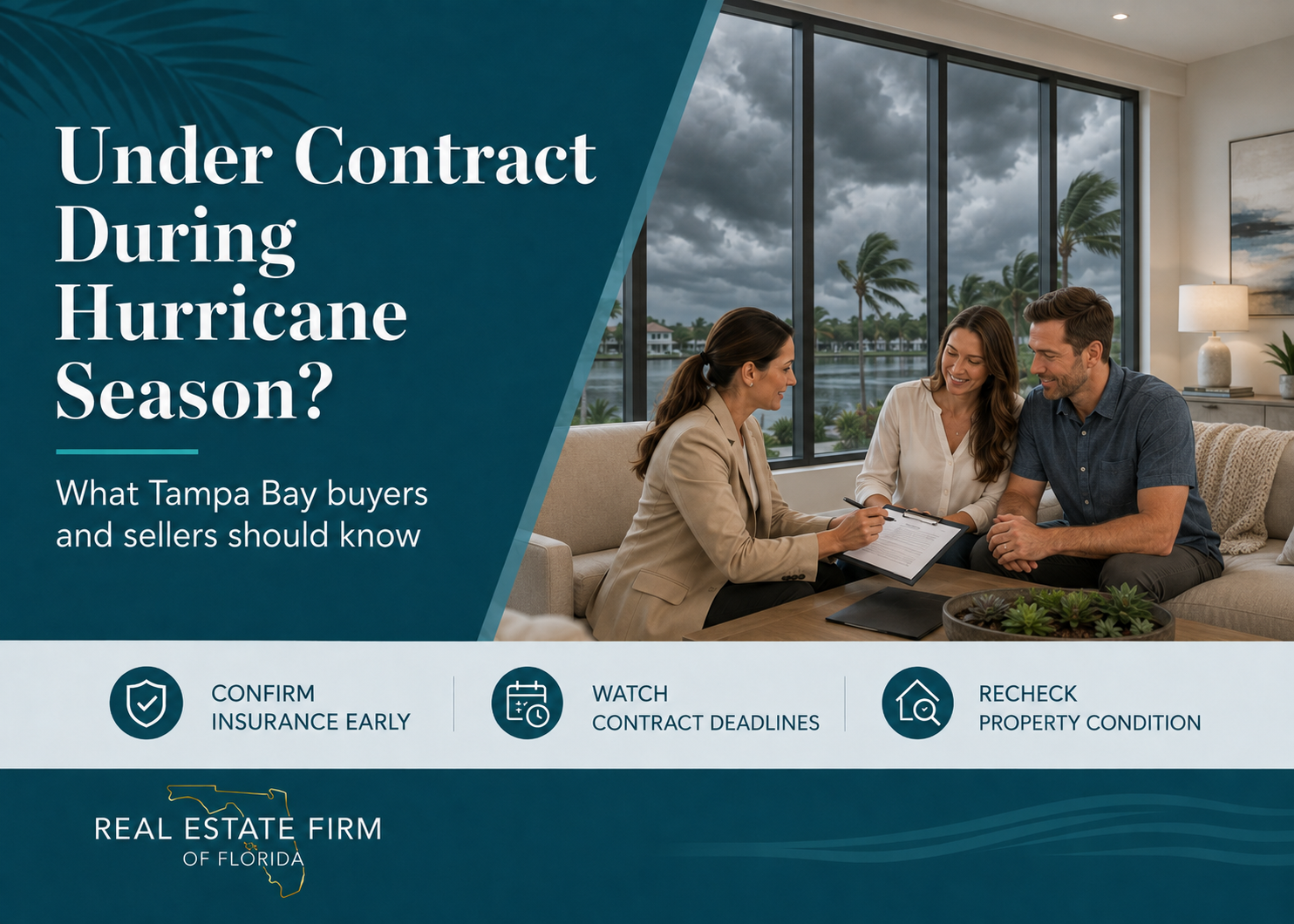
Florida real estate transactions continue throughout hurricane season.
Homes are listed, offers are accepted, inspections are completed, and closings take place from June through November every year. Most transactions move forward without a storm becoming part of the story.
Still, a buyer or seller who is under contract during hurricane season should understand that weather can affect timing, insurance, repairs, property condition, and communication.
NOAA defines the Atlantic hurricane season as June 1 through November 30. Its 2026 outlook gave the highest probability to a below-normal season, but NOAA also emphasizes that seasonal activity predictions do not determine whether a particular location will be affected.
For an active Tampa Bay transaction, the practical issue is not the number of storms predicted for the entire Atlantic. It is whether developing weather affects the property, insurer, lender, inspector, contractor, title company, or closing schedule.
Table of Contents
Insurance Can Become Time-Sensitive
Buyers should begin the insurance process early in every transaction.
During hurricane season, that timing can become especially important. Insurance companies may temporarily restrict the binding of new coverage when a named storm or other weather threat enters a defined area.
The details vary by insurer and event. A buyer should not assume that receiving a quote means the policy has been fully bound.
Questions for the insurance professional may include:
- What is still needed to bind coverage?
- Could an approaching storm affect the binding date?
- Is a four-point or wind-mitigation inspection required?
- Is separate flood insurance required or recommended?
- Does the roof age or condition affect eligibility?
- When should the policy become effective?
An insurance delay can become a lending or closing delay. Starting early gives the buyer and transaction team more time to respond.
Inspections Should Be Scheduled Promptly
Inspection deadlines do not automatically pause because it is hurricane season.
Buyers should schedule the general home inspection and any property-specific evaluations as early as reasonably possible. Depending on the home, that may include inspections of the roof, pool, seawall, dock, plumbing, electrical system, HVAC, or other components.
REFF’s guide to home inspections in Tampa Bay provides a useful overview.
Weather may affect access to the roof or exterior areas. Contractors may also become more difficult to schedule if homeowners throughout the region begin preparing for a storm.
Prompt scheduling reduces unnecessary pressure.
Buyers and Sellers Should Understand Property Condition at Closing
The condition of the property matters all the way through closing.
If a storm or severe weather affects the home after the inspection but before closing, buyers and sellers should notify their real estate and closing professionals promptly.
The Florida contract used in the transaction may address risk of loss, property condition, repairs, delays, and other consequences. The exact rights and responsibilities depend on the signed agreement and circumstances. Parties should obtain legal advice when interpretation is required.
A REALTOR® can help coordinate communication but cannot provide legal or insurance determinations outside the scope of real estate services.
The Final Walkthrough Becomes Especially Important
A final walkthrough gives the buyer an opportunity to confirm that the property remains in the expected condition before closing.
After severe weather, the walkthrough may need closer attention. Depending on the property, the buyer may look for visible changes involving:
- Roof and exterior surfaces
- Windows and doors
- Water intrusion
- Landscaping and fences
- Pool equipment and screen enclosures
- Docks, lifts, or seawalls
- Agreed repairs
- Included personal property or fixtures
A walkthrough is not a substitute for a full professional inspection. If new damage is suspected, the buyer should speak with the REALTOR®, inspector, lender, insurer, and closing professionals before proceeding.
REFF’s article on preventable closing-day surprises provides additional guidance for the final stage of the transaction.
Sellers Remain Responsible for the Property
Until the transaction closes, sellers generally need to continue maintaining and protecting the home as required by the contract.
During hurricane season, that may mean securing outdoor furniture, keeping utilities active when required, monitoring a vacant property, preparing shutters, and maintaining insurance.
Seasonal and absentee owners should have a clear plan for the property if they are outside the area.
Sellers can also help the transaction by organizing available records. Roof permits, wind-mitigation reports, repair invoices, HVAC service records, elevation certificates, and association documents may help answer buyer, lender, insurer, or inspector questions.
Not every seller will have every document. Providing what is available can still reduce delays.
Repair Agreements Should Be Specific
Repair negotiations can become more complicated when contractor availability changes because of weather.
A clear agreement should identify the work, responsible party, completion deadline, documentation requirements, and whether a licensed contractor or permit is needed.
Vague language can create disagreement even in perfect weather. A developing storm adds another reason to document expectations carefully.
If the agreed work cannot be completed on time, buyers and sellers should communicate through their representatives rather than assume the closing will simply adjust itself.
Flood and Evacuation Information Still Matter
Flood zones and evacuation zones serve different purposes, but both can be relevant during a hurricane-season purchase.
The buyer should review the property’s flood designation, insurance needs, evacuation information, and any available storm-surge mapping.
Pinellas County advises residents and buyers to check flood zones, evacuation zones, and storm-surge information separately because the designations are based on different conditions.
This is especially important for coastal, waterfront, low-lying, and condominium properties.
Communication Is the Most Important Preparedness Tool
Storm conditions can change quickly. Silence creates uncertainty.
Buyers and sellers should know how information will flow between the REALTOR®, lender, insurance provider, title or closing company, inspector, and contractors.
A practical communication plan includes:
- Confirming who should be notified if a storm threatens the area.
- Verifying whether insurance has been bound.
- Reviewing outstanding deadlines.
- Confirming access to the property.
- Discussing inspection, appraisal, repair, or walkthrough changes.
- Following written guidance from the closing and legal professionals.
Preparation cannot control the weather, but it can prevent avoidable confusion.
Frequently Asked Questions
Can a Tampa Bay home close during hurricane season?
Yes. Transactions close throughout hurricane season. Buyers and sellers should simply begin insurance and inspection work early and remain attentive to developing weather.
Can an insurer stop issuing new policies before a storm?
An insurer may temporarily restrict binding new coverage when a storm creates increased exposure. Buyers should confirm the current status directly with their insurance professional.
What happens if a home is damaged before closing?
The signed contract, extent of damage, insurance, lender requirements, and other facts determine the next steps. Buyers and sellers should contact their real estate and closing professionals promptly and seek legal advice when needed.
Should the buyer complete another inspection after a storm?
A final walkthrough should confirm the expected condition. If new damage is suspected, the buyer should discuss whether an additional professional inspection is appropriate.
Can severe weather delay closing?
Yes. Insurance, inspections, appraisals, repairs, lenders, municipal offices, title companies, and access to the property can all be affected.
Final Thoughts
Being under contract during hurricane season does not mean the transaction is destined for trouble.
It means preparation should begin early, documentation should be organized, and communication should remain consistent.
Real Estate Firm of Florida helps buyers and sellers navigate Tampa Bay transactions with experienced, steady guidance. Browse homes for sale, review REFF’s local market reports, or contact the brokerage to discuss an upcoming move.
Are You Buying or Selling a Home in Tampa Bay?
You can use this website to search homes for sale in Tampa Bay and all its communities. Our site is directly connected to the Tampa Bay MLS, and we update our listings every hour. You can even use our site to create your own account and get emails as soon as a new home hits the market, price change alerts and so much more.
While you’re here, check out these listings:
Get Instant Access to Hot New Listings by Filling Out the Form Below