Condo vs. House in Tampa Bay: 7 Smart Questions Buyers Should Ask First
Condo vs. House in Tampa Bay: 7 Smart Questions Buyers Should Ask First
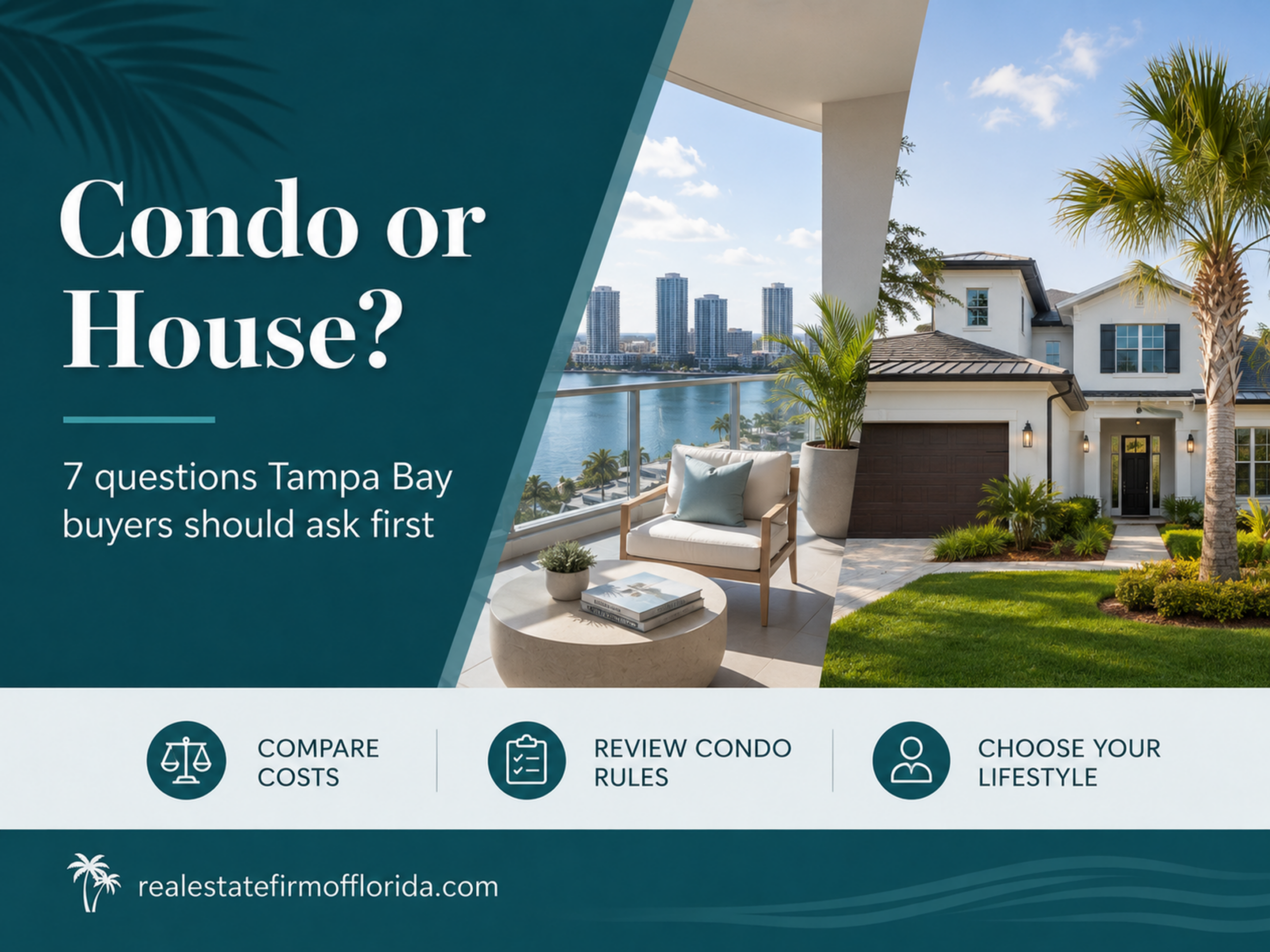
Choosing between a condo and a house in Tampa Bay isn’t just about square footage.
It’s about lifestyle, maintenance, location, monthly costs, insurance, privacy, amenities, and how much responsibility you want after closing.
For some buyers, a waterfront condo in Clearwater Beach or St. Pete Beach feels like the perfect Florida lifestyle. For others, a single-family home in Tampa, Riverview, Dunedin, Land O’ Lakes, Wesley Chapel, or Apollo Beach may offer the space, privacy, garage, yard, or pool they want.
Neither option is automatically better.
The right choice depends on how you want to live.
If you’re comparing a condo vs. house in Tampa Bay, here are seven smart questions to ask before you decide.
1. How Much Maintenance Do You Want to Handle?
Maintenance is one of the biggest lifestyle differences between a condo and a house.
A single-family home usually gives you more control, but it also gives you more responsibility.
You may be responsible for:
- Roof maintenance
- Exterior paint
- Landscaping
- Lawn care
- Pool service
- Pest control
- Driveway maintenance
- Exterior repairs
- Irrigation
- Tree trimming
- Storm preparation
- General upkeep
- For buyers who want space, privacy, and control, that tradeoff may be completely worth it.
A condo may reduce some of those responsibilities, depending on the building and association. Exterior maintenance, landscaping, roof maintenance, building insurance, amenities, and common areas may be handled through the association.
That can be appealing if you travel often, live in Florida seasonally, or simply don’t want to spend your weekends managing yard work and exterior projects.
But there’s a catch.
You’re still paying for that maintenance through condo fees, and you need to understand what those fees cover.
The easier lifestyle may be worth it, but buyers should look closely before assuming a condo is automatically cheaper or simpler.
2. What Monthly Costs Can You Comfortably Manage?
A condo may have a lower purchase price than a single-family home in the same general area, but the monthly cost comparison can be more complicated.
When comparing a condo vs. house in Tampa Bay, look beyond the list price.
For a single-family home, monthly ownership costs may include:
- Mortgage payment
- Property taxes
- Homeowners insurance
- Flood insurance when applicable
- Utilities
- Lawn care
- Pool maintenance when applicable
- Repairs
- Pest control
- HOA fees when applicable
- General maintenance savings
For a condo, monthly ownership costs may include:
- Mortgage payment
- Property taxes
- Condo insurance
- Flood insurance when applicable
- Monthly association fees
- Special assessments
- Parking fees when applicable
- Storage fees when applicable
- Utilities not included in the fee
- Interior repairs
- Personal property coverage
This is where buyers can get surprised.
A condo that looks affordable online may come with higher association fees, upcoming assessments, or building-related costs that affect the true monthly payment.
Before making a decision, ask for the full cost picture.
You can use Real Estate Firm of Florida’s mortgage calculator to estimate a starting monthly payment, then talk with your lender, insurance professional, and REALTOR® about property-specific costs.
3. How Important Are Location and Lifestyle?
Condos often make sense for buyers who prioritize location, views, amenities, and convenience.
In Tampa Bay, buyers may consider condos because they want to be closer to:
- Clearwater Beach
- St. Pete Beach
- Downtown St. Petersburg
- Downtown Tampa
- Dunedin
- Belleair
- Treasure Island
- Gulf Coast beaches
- Restaurants and entertainment
- Marinas
- Walkable areas
- Low-maintenance seasonal living
A condo may provide access to a lifestyle that would be much more expensive in a single-family home.
On the other hand, a house may make more sense if you want:
- More privacy
- A yard
- A private pool
- More storage
- A garage
- Space for pets
- Room for guests
- More separation from neighbors
- Flexibility to renovate
- Outdoor living areas
- A quieter neighborhood setting
A buyer looking for a Gulf-view condo and a buyer looking for a pool home in a suburban neighborhood are not really searching for the same thing.
That’s why the first question should not be “Which is better?”
The better question is: “Which property type fits the way I actually want to live?”
You can browse Real Estate Firm of Florida’s
Tampa Bay lifestyle property searches to explore condos, waterfront properties, homes with pools, 55+ homes, luxury homes, gated communities, and more.
4. What Rules Are You Comfortable Living With?
Condo living usually comes with more shared rules.
That’s not always a bad thing. Rules can help protect the building, maintain shared spaces, and create a more predictable environment.
But buyers need to understand those rules before they buy.
Condo and association rules may cover:
- Pets
- Rentals
- Guests
- Parking
- Renovations
- Flooring
- Balcony use
- Storage
- Vehicles
- Noise
- Amenities
- Moving procedures
- Hurricane shutters or impact windows
- Exterior decor
- Short-term rental restrictions
A single-family home may also have rules if it’s located in an HOA or deed-restricted community, but the level of control may be different.
If you have pets, plan to rent the property seasonally, want to renovate, need multiple vehicles, or expect frequent guests, association rules matter.
Read the current documents before your deadlines.
A property can be beautiful and still be the wrong fit if the rules don’t work for your lifestyle.
5. What Should Condo Buyers Know About Florida Building Requirements?
This is one of the most important current questions for Florida condo buyers.
Florida has added more attention around condominium building safety, inspections, reserves, and long-term maintenance.
The Florida Department of Business and Professional Regulation provides official guidance about condominium milestone inspections and Structural Integrity Reserve Studies. These requirements may apply to certain condominium and cooperative buildings, especially those that are three stories or higher.
Pinellas County also explains that buildings requiring milestone inspections generally need them once they reach 30 years of age and every 10 years after that.
In plain English, condo buyers should ask more questions than they used to.
Before buying a condo, review:
- Building age
- Milestone inspection status when applicable
- Structural Integrity Reserve Study status when applicable
- Association budget
- Reserve funding
- Current monthly fees
- Upcoming fee increases
- Special assessments
- Insurance coverage
- Maintenance history
- Planned repairs
- Recent building projects
- Pending litigation when applicable
- Board meeting minutes
- Association rules
This doesn’t mean buyers should avoid condos, It means buyers should be informed.
A well-managed building with clear financials and a strong maintenance plan may give buyers more confidence. A building with unclear records, surprise assessments, or unresolved maintenance concerns may require a much closer look.
Your REALTOR®, lender, insurance professional, attorney when appropriate, and condo-document review team can help you understand what you’re reviewing.
6. How Do Insurance and Flood Zones Compare?
Insurance questions matter for both condos and houses in Tampa Bay.
With a house, you may need to consider:
- Homeowners insurance
- Flood insurance
- Wind considerations
- Roof age and condition
- Four-point inspection issues
- Pool or exterior features
- Elevation
- Property condition
With a condo, you may need to understand:
- The association’s master insurance policy
- Your individual condo policy
- Flood insurance responsibilities
- Interior coverage
- Personal property coverage
- Deductibles
- Building coverage
- Special assessments related to insurance costs
For either property type, check the address carefully.
The FEMA, Flood Map Service Center is the official public source for flood-hazard information. Use it as a starting point, then talk with your lender and insurance professional about the specific property.
Don’t assume a condo removes every insurance concern, and don’t assume a house is automatically riskier.
It depends on the property, location, building, association, structure, and coverage available.
7. How Long Do You Plan to Own the Property?
Your timeline matters.
A condo may make sense if you want a seasonal property, lower-maintenance living, shared amenities, or a location near beaches, restaurants, or downtown areas.
A house may make sense if you want long-term flexibility, more outdoor space, room for pets or family, private storage, or the option to customize the property over time.
Ask yourself:
- Will I live here full-time?
- Is this a second home?
- Do I plan to retire here?
- Will I need room for family or guests?
- Do I want a lock-and-leave lifestyle?
- Am I comfortable with association rules?
- How much maintenance do I want?
- How important is resale flexibility?
- Could my lifestyle change in the next few years?
- Would I rather pay fees or manage maintenance myself?
The answer may not be obvious right away.
That’s why comparing property types side by side can help.
Use the Real Estate Firm of Florida interactive map search to compare current Tampa Bay condos and houses by location, price, and lifestyle features.
Condo vs. House in Tampa Bay: Quick Comparison
Here’s a simple way to think about the difference.
A Condo May Be a Good Fit If You Want:
- Lower-maintenance living
- Shared amenities
- Beach, waterfront, or downtown access
- Seasonal or lock-and-leave convenience
- Less exterior responsibility
- A more compact lifestyle
- A building or community setting
A House May Be a Good Fit If You Want:
- More privacy
- A yard
- More storage
- A private garage
- More control over improvements
- Space for pets
- Room for guests
- A pool or larger outdoor living area
- More separation from neighbors
Again, one isn’t better than the other. It comes down to fit.
What Buyers Should Review Before Making an Offer
Before choosing between a condo and a house, review the details that could affect your ownership experience.
For a condo, ask for:
- Condo documents
- Budget
- Reserve information
- Association rules
- Insurance information
- Fee history
- Assessment history
- Meeting minutes
- Building-maintenance information
- Milestone inspection information when applicable
- Structural Integrity Reserve Study information when applicable
For a house, review:
- Roof age
- HVAC age
- Electrical and plumbing condition
- Insurance options
- Flood-zone information
- HOA rules when applicable
- Exterior maintenance
- Yard and landscaping needs
- Pool condition when applicable
- Drainage
- Inspection findings
In both cases, the goal is the same. You want to know what you’re buying before you buy it.
FAQ About Buying a Condo vs. House in Tampa Bay
Is it better to buy a condo or a house in Tampa Bay?
It depends on your lifestyle, budget, maintenance preferences, location goals, and long-term plans. A condo may offer lower-maintenance living and strong location benefits, while a house may provide more privacy, space, and control.
Are condos cheaper than houses in Tampa Bay?
Sometimes, but not always. A condo may have a lower purchase price, but association fees, assessments, insurance, and building costs can affect the total monthly expense. Always compare the full cost, not just the list price.
What should I ask before buying a Florida condo?
Ask about association fees, reserves, insurance, assessments, building age, milestone inspections when applicable, Structural Integrity Reserve Studies when applicable, rental rules, pet rules, parking, and maintenance responsibilities.
Do houses have more maintenance than condos?
Usually, yes. A single-family homeowner is often responsible for the roof, exterior, landscaping, pool, driveway, and general upkeep. Condo owners may share some responsibilities through the association, but they still pay for those services through fees.
Do I need flood insurance for a condo or house in Tampa Bay?
It depends on the property and lender requirements. Review the FEMA flood-map information, then speak with your lender and insurance professional about the specific address.
Which is better for a seasonal Florida home?
A condo may work well for seasonal buyers who want a lower-maintenance or lock-and-leave lifestyle. A house may be better for buyers who want more space, a yard, private outdoor areas, or greater flexibility.
Final Thoughts
Choosing between a condo and a house in Tampa Bay is a lifestyle decision as much as a real estate decision.
A condo may give you convenience, views, amenities, and lower-maintenance living. A house may give you space, privacy, storage, outdoor living, and flexibility.
The best choice is the one that fits your budget, your daily routine, your long-term plans, and your comfort level with maintenance and rules.
Real Estate Firm of Florida helps buyers compare Tampa Bay property options with practical guidance and local insight.
Browse condos and townhomes, explore homes with pools, review waterfront and water-access properties, or use the
interactive Tampa Bay property search to start comparing your options.
You can also contact Real Estate Firm of Florida to talk through which property type may be the right fit for your next move.
Are You Buying or Selling a Home in Tampa Bay?
You can use this website to search homes for sale in Tampa Bay and all its communities. Our site is directly connected to the Tampa Bay MLS, and we update our listings every hour. You can even use our site to create your own account and get emails as soon as a new home hits the market, price change alerts and so much more.
While you’re here, check out these listings:
Get Instant Access to Hot New Listings by Filling Out the Form Below